



Global Shipbuilder Damen Cuts Time to Create and Translate Manuals Using MadCap IXIA CCMS
 Share
Share
 Share
Share
 Tweet
Tweet


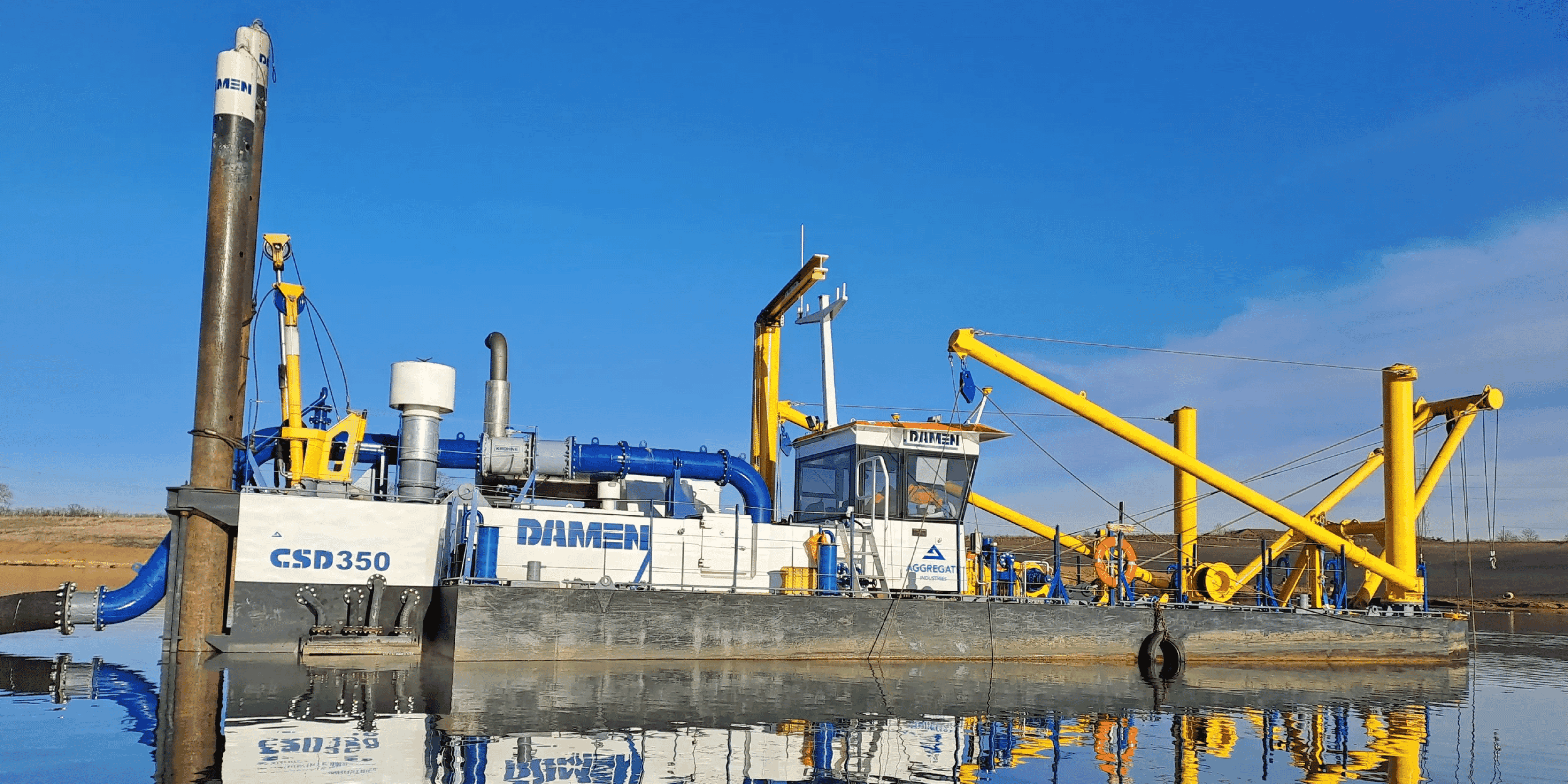
For more than 90 years, Damen Shipyards Group has revolutionized shipbuilding with maritime solutions that raise the standard in safety, reliability, efficiency and sustainability. Today, the international group conducts business in 120 countries and delivers over 150 vessels each year—from tugs and workboats to patrol craft, cargo vessels, dredgers, super yachts, and fast ferries.
To help customers safely operate their ships, the Damen Services Division produces comprehensive manuals using the MadCap IXIA CCMS cloud-based component content management system.
A Growing Demand for Standardization
Damen Services produces operating manuals for vessels. For years, the division relied on Adobe FrameMaker to create the manuals. Uncontrolled source documents made it difficult to find information and reuse content, but in the past, ships were highly customized, so much of the content was also custom.
Damen has focused on standardized shipbuilding since 1969. However, it was in recent years that the Damen Workboats Division reached a level of standardization where Damen Services saw an opportunity to standardize the content for its vessel operating manuals by migrating to a solution that supported structured authoring.
“Damen Workboats has started making tugboats that are highly standardized, and they want every tugboat that leaves the yard to be accompanied by a vessel operating manual,” explains Patrick Andriessen, team lead, asset management design in the Damen Services Division. “This was one of the business drivers for implementing a CCMS to standardize and reuse content, and it enabled us to justify the cost of investing in a solution.”
When evaluating CCMS offerings, the team recognized the need for a solution based on the Darwin Information Typing Architecture (DITA), which provided both a structured approach to content development and freedom from vendor lock-in.
“DITA is basically the most-used standard in this particular field, and it also gives us the option to take in information from other companies that use DITA,” notes Diederik Links, a senior technical writer, asset management design in the Damen Services Division.
The division also had a mandate to use a cloud-based solution, and after evaluating several software-as-a-service (SaaS) offerings, the team chose MadCap IXIA CCMS for its DITA-based architecture, comprehensive capabilities, and ease of integration.
“The SaaS version of MadCap IXIA CCMS was more mature than other solutions. It had enough functionality for our current needs, and the roadmap that was presented for future development aligned with our priorities,” Patrick explained.
The SaaS version of MadCap IXIA CCMS was more mature than other solutions. It had enough functionality for our current needs, and the roadmap that was presented for future development aligned with our priorities.
Launching Componentized Operating Manuals
In moving to componentized vessel operating manuals, Damen Services needed to learn how to create DITA-compliant content as well as understand the functions of a CCMS. To help acquire these skills, the group relied on MadCap Software’s training and support teams.
“MadCap really helped us during training and afterwards during our implementation, and it wasn’t just related to the application,” Patrick recalled. “DITA was new to us, and if we didn’t understand something, we could contact the MadCap support team, and they would take us through the intricacies of getting things properly set up.”
In the first year since onboarding MadCap IXIA CCMS, Damen Services has already produced about 80 new vessel operating manuals, which typically run 500 to 1,000 pages. The highly componentized structure of these documents enables the team to repurpose content, ensuring consistency and facilitating development.
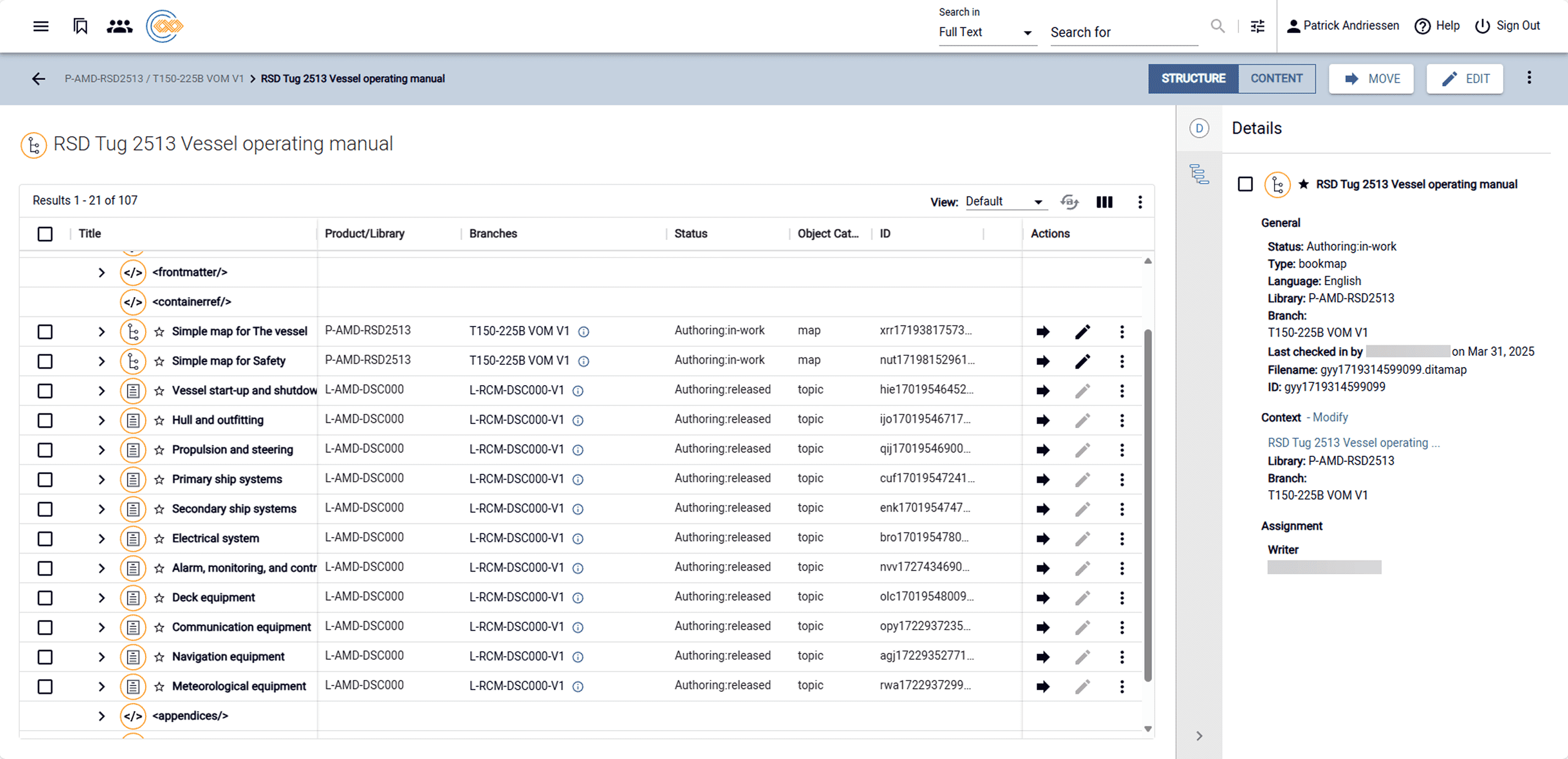
“A large number of the manuals are ones where we set up the document for the engineering template. Then, for each vessel, there is a PDF, so there is a new instance created with small changes,” Diederik explains. “These might be things in the metadata, some configuration changes of the vessel, and maps or topics that need to be removed or changed according to the options sold with that vessel. With our structured content in IXIA CCMS, a manual can be created within a very limited time.”
“Using IXIA CCMS to create structured, reusable content also makes us more aligned and more consistent, Patrick adds. “This has immensely benefited the quality of our manuals.”
Currently, the operating manuals are only produced as PDFs, but looking ahead, Damen Services expects the componentized content to support the use of artificial intelligence (AI) and development of online resources.
“The manuals that accompany the ships we build are delivered now as large, printable PDFs, since the different agencies that certify ships require the documentation to be on board in paper format,” Patrick notes. “While we still need to produce PDFs, we also want to do more with that content. Using MadCap IXIA CCMS will give us the flexibility to do interesting things with AI as well as publish our content in a knowledge base, online help, or application.”
Streamlining Content Creation and Delivery
Damen Services has found that creating structured DITA content requires more effort up front due to the detailed componentization, but it pays off in the speed and efficiencies gained by reuse.
For example, Patrick notes, “Damen Workboats delivers 100-plus tugboats a year. Previously, it could take three or four weeks to create a vessel-specific manual for a customer. Now, by repurposing our DITA content with MadCap IXIA CCMS, we can create the same operating manual in two days. So, without expanding our team, we can meet the required volume of manuals.”

Previously, it could take three or four weeks to create a vessel-specific manual for a customer. Now, by repurposing our DITA content with MadCap IXIA CCMS, we can create the same operating manual in two days.
Patrick Andriessen
Team Lead, Asset Management Design | Damen Services Division
The division also expects to see some benefits with less standardized products. A case in point is a large Damen ship that will be used to install wind farms on the open sea.
“The vessel is highly complex, and it easily takes three to four people working half a year to create the operating manual whether using FrameMaker or DITA,” Patrick explains. “We can justify this effort because we expect that more vessels of this type will be sold, and in the future, we will be able to reuse the content we're making now.”
Another factor contributing to efficiency is that MadCap IXIA CCMS separates content creation from how that information will be presented.
“With IXIA CCMS, we’re working in an editing environment, and we completely remove the presentation from the equation, so people find that they can concentrate on the text,” Patrick observes. “The interface is really straightforward, and the system takes care of formatting, so you don’t need to spend time worrying about how the manual is going to look.”
Additionally, Damen Services takes advantage of MadCap IXIA CCMS’ integration with Miramo, an intuitive low-code/no-code PDF formatter, to create PDF outputs of the vessel operating manuals.
“The integration between MadCap IXIA CCMS and Miramo is very helpful because it allows us to create our own PDF output templates instead of relying on a third-party consultant,” Patrick explains. “Once we have our template in place, a writer can just select the correct output, and then they're up and publishing.”
Facilitating Translations
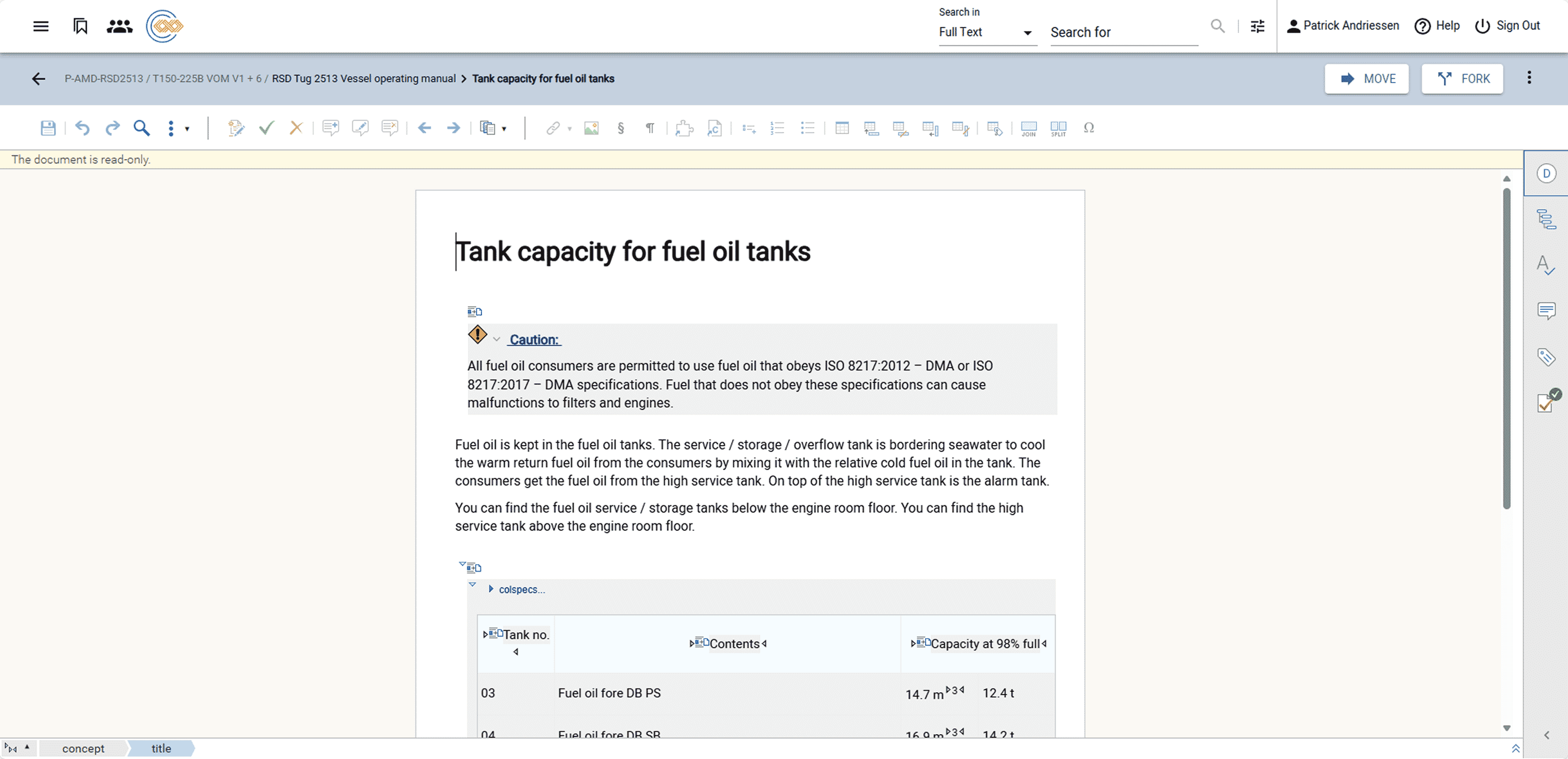
Damen Services offers translated versions of vessel operating manuals as an extra service that customers can purchase. Previously, cross-reference links in the team’s large Adobe FrameMaker files would often break during the translation process. By contrast, the componentized content created in MadCap IXIA CCMS retains its structure during translation.
“With our translated FrameMaker content, it could take half a day or more to get all the broken links sorted and print the PDF,” Patrick notes. “Now with IXIA CCMS, if the content is properly translated, it’s just a matter of uploading the zip file and publishing the content. It can be a 15-minute exercise.”
Because the operating manual content is now componentized, Damen Services can also save time and money on localization by repurposing previously translated content.
“Where we have already translated manuals created in IXIA CCMS, we may only need to translate 30% or 40% of a new manual,” Patrick says. “As a result, we can deliver translated operating manuals to customers faster with less effort and pass on the cost savings.”
Building on Early Success
Based on its initial success with the vessel operating manual PDFs, Damen Services plans to test ways to produce HTML content for two other systems that the group uses.
“We want to see if we can create our maintenance instructions using IXIA CCMS and publish them to our IBM Maximo enterprise asset management system,” Patrick explains. “We also want to test taking content created in IXIA CCMS and publishing it to the knowledge base we maintain in Salesforce.”
In addition, the work produced for Damen Workboats has led other business groups within Damen Shipyards Group to become interested in MadCap IXIA CCMS.
“We implemented IXIA CCMS together with the technical writing team from Damen Dredging Equipment. Other departments and divisions are also looking at what we are doing,” Patrick notes. “The engineering teams at build divisions have greater requirements; they need to create functional descriptions, manuals and specifications. They are also interested in knowledge management and reusing content that has already been created.”
Patrick adds, “With MadCap IXIA CCMS, we see so many opportunities to help teams avoid reinventing the wheel and instead benefit from the quality, consistency, and efficiencies that come from content reuse and collaboration.”
Share
ShareTweet
Discover the MadCap Advantage
MadCap Software makes it easy for technical and learning teams to author, manage, publish and distribute content—all in one place.